 EN
EN
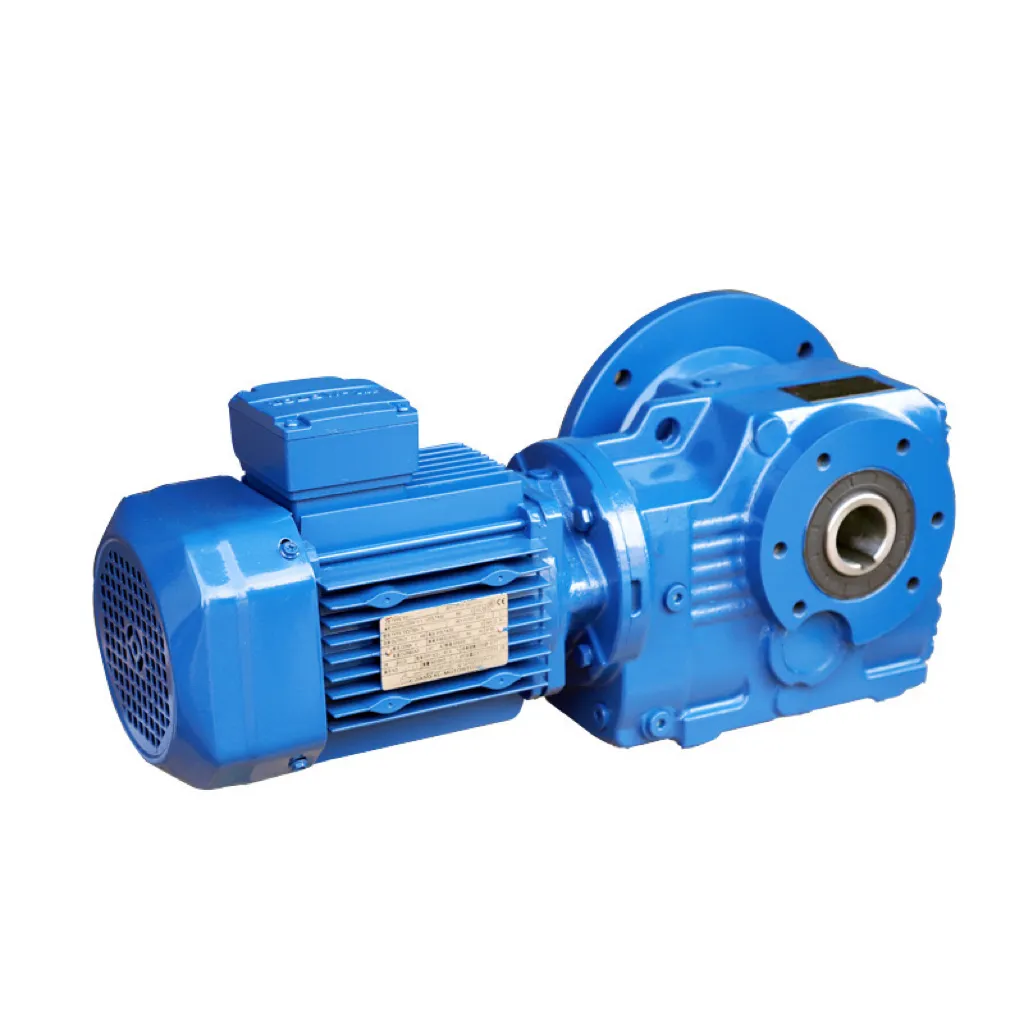
The self-locking feature of a worm gear reducer represents one of the most critical mechanical advantages in power transmission systems. This unique characteristic prevents backdriving, a phenomenon where the output load attempts to drive the system in reverse through the gear train. Understanding why this feature is crucial requires examining the fundamental mechanics of worm gear reducers and their applications across various industrial sectors. The prevention of backdriving through self-locking mechanisms ensures operational safety, maintains system integrity, and protects equipment from potentially damaging reverse motion scenarios.
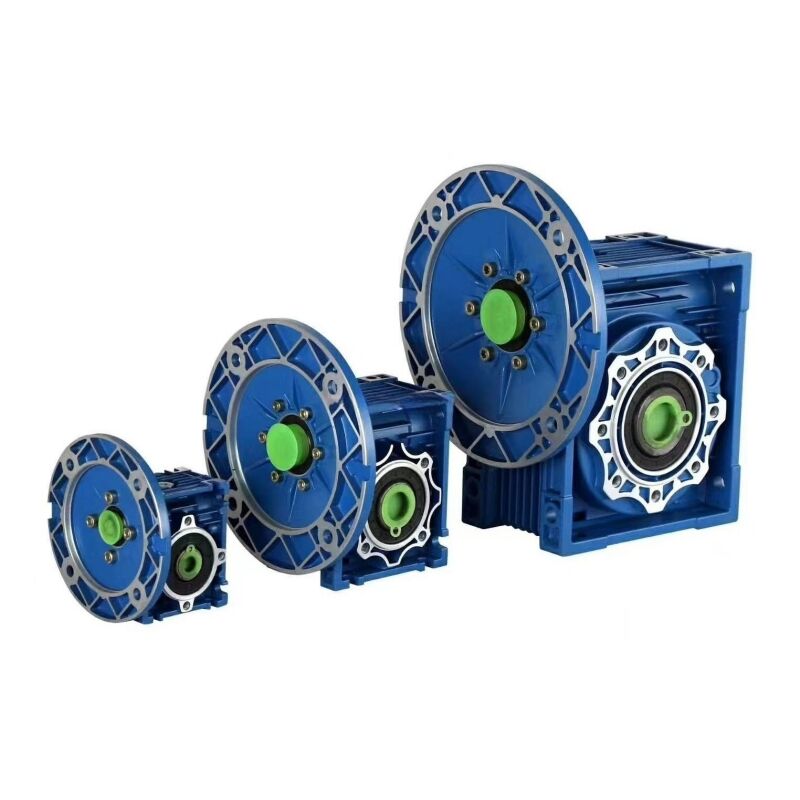
Understanding the Self-Locking Mechanism in Worm Gear Systems
Fundamental Principles of Worm Gear Self-Locking
The self-locking property of a worm gear reducer stems from the unique geometry and friction characteristics inherent in worm gear design. When the lead angle of the worm is sufficiently small, typically less than the friction angle between the worm and wheel materials, the system becomes irreversible. This means that while the worm can easily drive the gear wheel, the gear wheel cannot drive the worm in reverse direction. The coefficient of friction between the meshing surfaces plays a pivotal role in determining whether a worm gear reducer will exhibit self-locking behavior under specific load conditions.
The mathematical relationship governing self-locking involves the lead angle, pressure angle, and coefficient of friction. When these parameters align correctly, the torque required to backdrive the system exceeds what typical loads can generate. This creates an inherent mechanical brake that activates automatically whenever reverse motion is attempted. Engineers carefully calculate these parameters during the design phase to ensure reliable self-locking performance across the intended operating range of the worm gear reducer.
Material Properties Affecting Self-Locking Performance
The materials used in worm gear reducer construction significantly influence self-locking characteristics. Bronze wheels paired with steel worms typically provide optimal friction coefficients for reliable self-locking behavior. The surface finish, lubrication type, and operating temperature all affect the friction between meshing surfaces, thereby impacting the self-locking threshold. Manufacturers must carefully select material combinations that maintain consistent self-locking properties throughout the equipment's service life while ensuring adequate wear resistance and thermal stability.
Surface treatments and coatings can enhance or diminish self-locking capabilities depending on their friction characteristics. Some specialized applications require adjustable self-locking properties, achieved through controlled lubrication systems or variable surface treatments. Understanding these material interactions enables engineers to specify worm gear reducer configurations that reliably prevent backdriving while maintaining smooth forward operation and acceptable efficiency levels.
Critical Applications Where Backdriving Prevention is Essential
Lifting and Hoisting Equipment Safety
In lifting applications, the self-locking feature of a worm gear reducer serves as a primary safety mechanism preventing uncontrolled descent of suspended loads. Cranes, hoists, and elevator systems rely on this characteristic to maintain load position when power is removed or drive systems are disengaged. Without reliable self-locking, gravity would cause suspended loads to fall, creating severe safety hazards and potential equipment damage. The worm gear reducer acts as an automatic brake that engages whenever lifting force is removed, ensuring loads remain securely positioned.
Emergency scenarios particularly highlight the importance of self-locking worm gear reducers in lifting equipment. During power failures or mechanical breakdowns, the self-locking mechanism prevents catastrophic load drops that could injure personnel or damage surrounding equipment. Regulatory standards in many industries mandate the use of self-locking gear systems in overhead lifting applications specifically because of this inherent safety feature. The reliability of self-locking performance directly impacts worker safety and compliance with occupational health regulations.
Positioning Systems and Precision Machinery
Precision positioning systems benefit enormously from the self-locking characteristics of worm gear reducers. Manufacturing equipment, robotics, and automated machinery require accurate position holding without continuous power input to the drive system. The worm gear reducer maintains precise positioning by preventing external forces from displacing the mechanism when the motor is not actively driving. This capability is essential for maintaining dimensional accuracy and repeatability in manufacturing processes.
Machine tools, medical equipment, and scientific instruments often incorporate self-locking worm gear reducers to ensure stable positioning during operations. The elimination of position drift due to external disturbances or gravity improves overall system performance and reduces the need for constant position correction. This results in better product quality, reduced wear on positioning sensors, and improved energy efficiency by eliminating the need for continuous holding torque from the prime mover.
Mechanical Advantages of Self-Locking Worm Gear Reducers
Energy Efficiency and Power Savings
The self-locking nature of worm gear reducers contributes significantly to overall system energy efficiency by eliminating the need for continuous power input to maintain position or resist reverse motion. In applications where loads must be held in position for extended periods, conventional gear systems would require constant motor torque to prevent movement. A worm gear reducer with proper self-locking characteristics maintains position without any power consumption, resulting in substantial energy savings over time. This efficiency advantage becomes particularly pronounced in battery-powered or remote applications where power conservation is critical.
The energy savings extend beyond direct power consumption to include reduced heat generation and lower cooling requirements. Since the motor doesn't need to provide continuous holding torque, thermal stress on electrical components is minimized, leading to longer component life and reduced maintenance costs. Additionally, the absence of continuous current draw reduces electrical system sizing requirements and can enable the use of smaller, more economical motor controllers and power supplies in worm gear reducer applications.
Simplified Control System Requirements
Self-locking worm gear reducers significantly simplify control system design by eliminating the need for complex position-holding algorithms or mechanical braking systems. Traditional gear systems often require sophisticated control loops to maintain position against disturbing forces, increasing system complexity and potential failure points. The inherent self-locking characteristic of properly designed worm gear reducers provides this functionality mechanically, reducing software complexity and improving overall system reliability.
The simplified control requirements translate to reduced commissioning time, lower programming costs, and fewer opportunities for software-related failures. Maintenance personnel can service self-locking worm gear reducer systems more easily since the mechanical self-locking function doesn't depend on electronic controls or sensors that might require calibration or replacement. This mechanical simplicity contributes to higher system availability and lower total cost of ownership throughout the equipment lifecycle.
Design Considerations for Optimal Self-Locking Performance
Lead Angle Optimization
The lead angle of the worm represents the most critical design parameter affecting self-locking performance in a worm gear reducer. Engineers must carefully balance the lead angle to achieve reliable self-locking while maintaining acceptable efficiency and smooth operation. Smaller lead angles enhance self-locking reliability but reduce transmission efficiency and increase the risk of binding under heavy loads. Conversely, larger lead angles improve efficiency but may compromise self-locking capability, particularly under varying load and environmental conditions.
Optimal lead angle selection requires comprehensive analysis of the intended application, including load variations, environmental factors, and safety requirements. Computer modeling and testing protocols help engineers determine the ideal lead angle for specific worm gear reducer applications. Manufacturing tolerances also affect lead angle precision, making quality control procedures essential for ensuring consistent self-locking performance across production batches.
Friction Management and Lubrication Strategies
Proper lubrication plays a dual role in worm gear reducer operation, providing necessary protection against wear while maintaining appropriate friction levels for reliable self-locking. The lubricant selection process must consider viscosity, additives, and temperature characteristics that preserve self-locking properties throughout the operating range. Some lubricants may reduce friction to levels that compromise self-locking, while others may increase friction excessively, leading to reduced efficiency or difficulty in forward operation.
Advanced lubrication systems can provide variable friction characteristics that adapt to operating conditions, optimizing both efficiency and self-locking performance. Temperature-sensitive lubricants and controlled lubrication delivery systems enable fine-tuning of friction properties to maintain consistent worm gear reducer performance across varying environmental conditions. Regular monitoring and maintenance of lubrication systems ensure long-term preservation of self-locking characteristics and overall system reliability.
Industrial Standards and Safety Regulations
Compliance Requirements for Self-Locking Systems
International safety standards specifically address the use of self-locking mechanisms in industrial equipment, particularly for applications involving personnel safety or critical process control. Organizations such as ISO, ANSI, and industry-specific regulatory bodies have established criteria for testing and certifying self-locking worm gear reducer performance. These standards define minimum safety factors, testing procedures, and documentation requirements that manufacturers must meet to ensure reliable backdriving prevention.
Compliance with these standards requires comprehensive testing protocols that verify self-locking performance under various load conditions, temperatures, and wear states. Documentation must demonstrate that the worm gear reducer maintains adequate self-locking capability throughout its intended service life, even accounting for normal wear and environmental degradation. Regular re-certification may be required in critical applications to ensure continued compliance with evolving safety requirements.
Quality Assurance and Testing Protocols
Rigorous quality assurance procedures ensure that each worm gear reducer meets specified self-locking performance criteria before leaving the manufacturing facility. Testing protocols typically include static and dynamic backdriving tests under various load conditions, temperature cycling to verify performance across operating ranges, and endurance testing to confirm long-term reliability. Advanced testing equipment can precisely measure the torque required to initiate backdriving, enabling accurate verification of safety margins.
Field testing and validation procedures provide additional assurance that worm gear reducer self-locking performance meets real-world application requirements. These tests may include installation verification, periodic performance monitoring, and failure analysis procedures that help identify potential issues before they affect system safety or reliability. Comprehensive documentation of testing results supports warranty claims and provides valuable feedback for continuous product improvement initiatives.
Maintenance and Long-Term Performance Considerations
Wear Impact on Self-Locking Reliability
Normal wear in worm gear reducer components can gradually affect self-locking performance over time, making regular monitoring and maintenance essential for sustained reliability. Wear patterns on worm and wheel teeth may alter contact geometry and friction characteristics, potentially reducing the effectiveness of self-locking mechanisms. Predictive maintenance programs that monitor key performance indicators can identify wear-related changes before they compromise safety or functionality.
Advanced monitoring systems can track changes in backdriving resistance, operating temperatures, and vibration signatures that indicate wear progression in worm gear reducer components. Early detection of wear-related performance degradation enables proactive maintenance interventions that restore self-locking capability before safety margins are compromised. Regular inspection protocols should include specific checks for self-locking functionality as part of comprehensive maintenance programs.
Environmental Factors Affecting Performance
Environmental conditions significantly influence the long-term performance of self-locking worm gear reducer systems. Temperature variations affect lubricant viscosity and material expansion, both of which can impact friction characteristics and self-locking reliability. Humidity, contamination, and corrosive atmospheres may also degrade surface conditions and alter friction properties over time. Understanding these environmental effects enables engineers to specify appropriate materials and protective measures for specific applications.
Protective measures such as sealing systems, environmental enclosures, and specialized materials can mitigate adverse environmental effects on worm gear reducer performance. Regular environmental monitoring and condition assessment help identify potential issues before they affect self-locking capability. Maintenance schedules should account for environmental exposure levels, with more frequent inspections and services required for harsh operating conditions.
FAQ
What happens if a worm gear reducer loses its self-locking capability?
When a worm gear reducer loses its self-locking capability, the system becomes vulnerable to backdriving, which can result in uncontrolled movement of loads, potential safety hazards, and equipment damage. In lifting applications, this could lead to falling loads, while in positioning systems, it may cause position drift or loss of accuracy. Immediate inspection and remedial action are required when self-locking performance is compromised.
How can operators verify that self-locking is functioning properly?
Operators can verify self-locking functionality through controlled testing procedures that involve applying reverse torque to the output shaft while monitoring for any unwanted movement. Professional testing equipment can measure the exact torque required to initiate backdriving, ensuring it exceeds safe operating margins. Regular testing should be performed according to manufacturer recommendations and safety standards to confirm continued self-locking performance.
Can self-locking performance be adjusted or restored in existing worm gear reducers?
Self-locking performance can sometimes be restored through proper maintenance procedures such as lubrication system servicing, component replacement, or adjustment of operating parameters. However, fundamental design characteristics like lead angle and gear geometry cannot be modified without major reconstruction. In cases where self-locking capability is permanently compromised, replacement of the worm gear reducer may be necessary to ensure safe operation.
Are there alternatives to worm gear reducers for applications requiring backdriving prevention?
While other mechanical systems such as ratchet mechanisms, brake systems, and specialized clutches can prevent backdriving, worm gear reducers offer unique advantages in terms of compactness, reliability, and integration with speed reduction functions. Alternative solutions typically require additional components and complexity, making worm gear reducers the preferred choice for many applications where both speed reduction and backdriving prevention are required in a single, reliable package.
Table of Contents
- Understanding the Self-Locking Mechanism in Worm Gear Systems
- Critical Applications Where Backdriving Prevention is Essential
- Mechanical Advantages of Self-Locking Worm Gear Reducers
- Design Considerations for Optimal Self-Locking Performance
- Industrial Standards and Safety Regulations
- Maintenance and Long-Term Performance Considerations
-
FAQ
- What happens if a worm gear reducer loses its self-locking capability?
- How can operators verify that self-locking is functioning properly?
- Can self-locking performance be adjusted or restored in existing worm gear reducers?
- Are there alternatives to worm gear reducers for applications requiring backdriving prevention?